A new report has warned that synthetic personas and political deepfake videos created on Facebook pose a serious threat to democracy and the fairness of elections in Sri Lanka.
The warning was issued in a report titled “From Bedrooms to Parliament: AI Women, Political Deepfakes, and Facebook’s Growing Failures”, prepared by independent researcher Dr. Sanjana Hattotuwa.
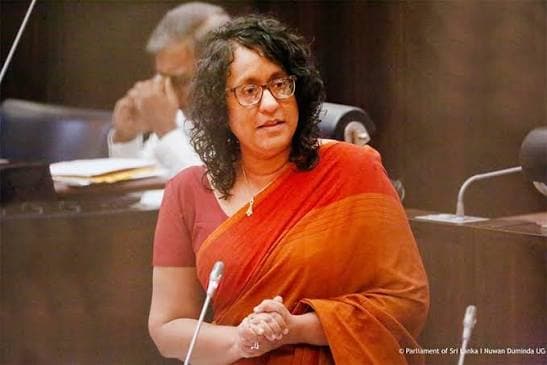
The report examines 10 AI-generated videos impersonating Prime Minister Harini Amarasuriya. The videos have collectively recorded more than 1.2 million views.
One fabricated video alone has been viewed more than 324,000 times. The video falsely portrays the Prime Minister as claiming that dengue can be controlled by turning mosquitoes homosexual.
According to the report, the fake accounts, which initially appeared as Sri Lankan women and were used to attract users and direct them towards adult chat, gambling, cryptocurrency and other financial destinations, have now begun to be used to distribute political content.
The report also reveals that although the watermark of the AI software used to create the videos was clearly visible, Facebook had not displayed an official label indicating that the videos were generated using AI.
The videos also contained gender-based abusive comments targeting the Prime Minister, while some users reportedly accepted the fabricated claims as genuine.
Dr. Hattotuwa has warned that the same network built through fake female accounts could also be used for political influence operations.
The report’s executive summary warns that the increasing ability to produce and distribute sophisticated synthetic media could negatively affect future presidential and parliamentary elections, political discourse between elections and governance in Sri Lanka.
The matter has already been brought to the attention of Prime Minister Harini Amarasuriya. In a letter dated September 7, Dr. Sanjana Hattotuwa forwarded the report to the Prime Minister’s Office and called for a responsible response from Meta, the parent company of Facebook.
The letter also calls for an urgent review to identify and label fraudulent AI-generated content in Sinhala and Tamil, address gender-based abuse and strengthen social media safety in Sri Lanka.
It further states that the threat is not limited to any one political party, noting that AI accounts have been used both to attack the government and to pose as government supporters while attacking political opponents.
Dr. Hattotuwa also stressed the need for continued cooperation among Meta, Sri Lankan authorities, the Election Commission and independent researchers to address the risks posed by synthetic political content.